Unintended pregnancies and associated factors among women in two districts of the Northern Cape, South Africa
What does this suggest about the family planning program?
DOI:
https://doi.org/10.24252/al-sihah.v18i1.61299Keywords:
contraception, family planning services, female, pregnancy, unplannedAbstract
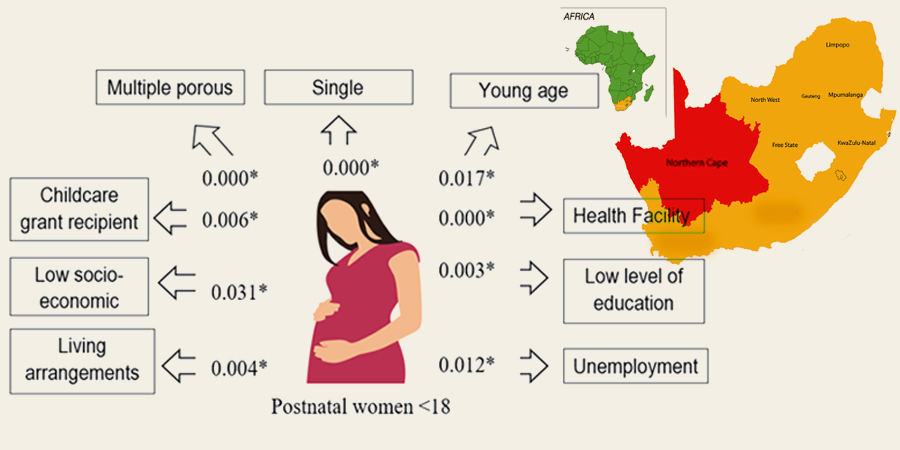
Despite the promotion of family planning services within South Africa, there are still shortfalls and challenges within the system which contributes to unintended pregnancies. Unintended pregnancies remain a public health concern, which negatively affects maternal and child-health outcomes. This paper reports on the prevalence of unintended pregnancies among 2527 women in the Northern Cape, South Africa. The socio-demographic questionnaire was used to collect data and Stata-18 was used for data analysis (p≤0.05). The majority of the participants were single (n=1777; 70.45%) and unemployed (n=2072; 82.52%) with a mean age of 27. The majority (56.14%, n=1413) had unintended pregnancies. Unintended pregnancies were significantly associated with being young [OR: 1.2; CI: 1.03; 1.41], single [OR: 1.4; CI: 1.30;1.58], unemployed [OR: 1.3; CI: 1.05; 1.61], multiparous [OR: 1.3; CI: 1.01; 1.62] and having a household income below R 500 [OR: 1.1; CI: 1.01; 1.12]. Whereas having a tertiary education [OR: 1.4; 95 % CI: 1.08;1.51] and living alone [OR: 1.2; 95 % CI: 1.12;1.92] was associated with lesser odds of having an unintended pregnancy. The high rates of unintended pregnancies in this sample suggest the need to assess the appropriateness of the family planning program in the province.
Downloads
References
Ayamolowo, L. B., Ayamolowo, S. J., Adelakun, D. O., & Adesoji, B. A. (2024). Factors influencing unintended pregnancy and abortion among unmarried young people in Nigeria: A scoping review. BMC Public Health, 24(1), 1494. https://doi.org/10.1186/s12889-024-19005-8
Baloyi, T. V., Rammopo, M., & Fernandes, L. (2023). Prevalence and factors associated with unintended pregnancies: A study from a clinic in Tshwane district, South Africa. African Journal for Physical Activity and Health Sciences (AJPHES), 29(3), 252–265. https://doi.org/10.37597/ajphes.2023.29.3.2
Bearak, J., Popinchalk, A., Ganatra, B., Moller, A.-B., Tunçalp, Ö., Beavin, C., Kwok, L., & Alkema, L. (2020). Unintended pregnancy and abortion by income, region, and the legal status of abortion: Estimates from a comprehensive model for 1990–2019. The Lancet Global Health, 8(9), e1152–e1161. https://doi.org/10.1016/S2214-109X(20)30315-6
Chersich, M. F., Wabiri, N., Risher, K., Shisana, O., Celentano, D., Rehle, T., Evans, M., & Rees, H. (2017). Contraception coverage and methods used among women in South Africa: A national household survey. South African Medical Journal = Suid-Afrikaanse Tydskrif Vir Geneeskunde, 107(4), 307–314. https://doi.org/10.7196/SAMJ.2017.v107i4.12141
Costa, A. C. M., Oliveira, B. L. C. A. D., & Alves, M. T. S. S. D. B. E. (2021). Prevalence and factors associated with unplanned pregnancy in a Brazilian capital in the Northeast. Revista Brasileira de Saúde Materno Infantil, 21(2), 461–471. https://doi.org/10.1590/1806-93042021000200007
Dehingia, N., Dixit, A., Atmavilas, Y., Chandurkar, D., Singh, K., Silverman, J., & Raj, A. (2020). Unintended pregnancy and maternal health complications: Cross-sectional analysis of data from rural Uttar Pradesh, India. BMC Pregnancy and Childbirth, 20(1), 188. https://doi.org/10.1186/s12884-020-2848-8
Eftekhariyazdi, M., Mehrbakhsh, M., Neamatshahi, M., & Moghadam, M. Y. (2021). Comparison of pregnancy complications in unintended and intended pregnancy: A prospective follow-up study. BioMedicine, 11(4), 51–56. https://doi.org/10.37796/2211-8039.1192
Gelaw, K. A., Atalay, Y. A., & Gebeyehu, N. A. (2023). Unintended pregnancy and contraceptive use among women in low- and middle-income countries: Systematic review and meta-analysis. Contraception and Reproductive Medicine, 8(1), 55. https://doi.org/10.1186/s40834-023-00255-7
Gharaee, M., & Baradaran, H. R. (2020). Consequences of unintended pregnancy on mother and fetus and newborn in North-East of Iran. The Journal of Maternal-Fetal & Neonatal Medicine, 33(5), 876–879. https://doi.org/10.1080/14767058.2018.1500538
Haffejee, F., Govender, N., Reddy, P., Sibiya, M. N., Ghuman, S., Ngxongo, T., Borg, D., & O, ’Connor Laura. (2018). Factors associated with unintended pregnancy among women attending a public health facility in KwaZulu-Natal, South Africa. South African Family Practice, 60(3), 79–83. https://doi.org/10.1080/20786190.2017.1396790
Islam, M. J. (2024). The Relationship Between Childhood Abuse and Unintended Pregnancy Among Married Women of Reproductive Age in Bangladesh. Journal of Child Sexual Abuse, 33(2), 243–261. https://doi.org/10.1080/10538712.2024.2314283
Kareem, Y. O., Adelekan, B., Bungudu, K., Goldson, E., Dasogot, A., Hajjar, J. M., & Yaya, S. (2024). Assessment of the Trends and Factors Associated With Unintended Pregnancy Among Women of Reproductive Age: An Analysis of the Nigerian Demographic Health Survey Between 2008 to 2018. International Journal of Sexual Health, 36(3), 302–316. https://doi.org/10.1080/19317611.2024.2346144
Karki, R. D., Thapa, N. R., Subedi, G., & Karki, T. M. (2024). Trend and Factors Associated With Unintended Pregnancy Among Currently Married Women in Nepal. Journal of Population and Social Studies, 33, 26–44. https://doi.org/10.25133/JPSSv332025.002
Kgarose, M., Mashiane, P. P., & Machaka, M. (2023). Exploring factors contributing to unplanned pregnancies among students at higher education institution in South Africa. International Journal of Research in Business and Social Science (2147- 4478), 12(1), 318–324. https://doi.org/10.20525/ijrbs.v12i1.2299
Kim, D. H., Michalopoulos, L. M., & Voisin, D. R. (2021). Validation of the Brief Symptom Inventory–18 Among Low-Income African American Adolescents Exposed to Community Violence. Journal of Interpersonal Violence, 36(1–2), NP984–NP1002. https://doi.org/10.1177/0886260517738778
Kriel, Y., Milford, C., Cordero, J. P., Suleman, F., Steyn, P. S., & Smit, J. A. (2021). Quality of care in public sector family planning services in KwaZulu-Natal, South Africa: A qualitative evaluation from community and health care provider perspectives. BMC Health Services Research, 21(1), 1246. https://doi.org/10.1186/s12913-021-07247-w
Lundsberg, L. S., Pensak, M. J., & Gariepy, A. M. (2020). Is Periconceptional Substance Use Associated with Unintended Pregnancy? Women’s Health Reports, 1(1), 17–25. https://doi.org/10.1089/whr.2019.0006
Matthay, E. C., Hagan, E., Gottlieb, L. M., Tan, M. L., Vlahov, D., Adler, N., & Glymour, M. M. (2021). Powering population health research: Considerations for plausible and actionable effect sizes. SSM - Population Health, 14, 100789. https://doi.org/10.1016/j.ssmph.2021.100789
Mbongwa, L., Mpanza, S., & Mlambo, V. H. (2024). The Teenage Pregnancy Crisis in South Africa Among High School Students, Causes, Implications and Possible Solutions: A Literature Review. Futurity Education, 4(3), 200–216. https://doi.org/10.57125/FED.2024.09.25.12
Moges, Y., Worku, S. A., Niguse, A., & Kelkay, B. (2020). Factors Associated with the Unplanned Pregnancy at Suhul General Hospital, Northern Ethiopia, 2018. Journal of Pregnancy, 2020(1), 2926097. https://doi.org/10.1155/2020/2926097
Mutinta, G. (2022). Mental distress among university students in the Eastern Cape Province, South Africa. BMC Psychology, 10(1), 204. https://doi.org/10.1186/s40359-022-00903-8
Ndagijimana, J. B., & Ugiriwabo, P. (2023). Causes of Unplanned Pregnancies in Secondary School and its Impact on the School Performance (SSRN Scholarly Paper No. 4377016). Social Science Research Network. https://papers.ssrn.com/abstract=4377016
Nelson, H. D., Darney, B. G., Ahrens, K., Burgess, A., Jungbauer, R. M., Cantor, A., Atchison, C., Eden, K. B., Goueth, R., & Fu, R. (2022). Associations of Unintended Pregnancy With Maternal and Infant Health Outcomes: A Systematic Review and Meta-analysis. JAMA, 328(17), 1714. https://doi.org/10.1001/jama.2022.19097
Niemeyer Hultstrand, J., Omer Abuelgasim ,Khalda, Tydén ,Tanja, Jonsson ,Maria, Maseko ,Nokuthula, & and Målqvist, M. (2021). The perpetuating cycle of unplanned pregnancy: Underlying causes and implications in Eswatini. Culture, Health & Sexuality, 23(12), 1656–1671. https://doi.org/10.1080/13691058.2020.1791359
Osborne, A., Yillah, R. M., Bangura, C., & Ahinkorah, B. O. (2025). Provincial distribution of unintended pregnancy and its associated factors in Sierra Leone. BMC Public Health, 25(1), 9. https://doi.org/10.1186/s12889-024-20990-z
Sarder, A., Islam, S. M. S., Maniruzzaman, Talukder, A., & Ahammed, B. (2021). Prevalence of unintended pregnancy and its associated factors: Evidence from six south Asian countries. PLOS ONE, 16(2), e0245923. https://doi.org/10.1371/journal.pone.0245923
Schonewille, N. N., Rijkers, N., Berenschot, A., Lijmer, J. G., van den Heuvel, O. A., & Broekman, B. F. P. (2022). Psychiatric vulnerability and the risk for unintended pregnancies, a systematic review and meta-analysis. BMC Pregnancy and Childbirth, 22(1), 153. https://doi.org/10.1186/s12884-022-04452-1
Seakamela, K. P., Mashaba, R. G., Ntimana, C. B., Mbombi, M. O., Tlouyamma, J., Mphekgwana, P., Nemuramba, R., Mothapo, K., Muthelo, L., Mabila, L. N., Dhau, I., & Maimela, E. (2023). Prevalence and associated factors of probable depression amongst pregnant and parenting young females: A comparison of adolescents and young adults in rural South Africa. Frontiers in Child and Adolescent Psychiatry, 2. https://doi.org/10.3389/frcha.2023.1200759
Sikaluzwe, M., Phiri, M., Lemba, M., Shasha, L., & Muhanga, M. (2024). Trends in prevalence and factors associated with unintended pregnancies in Zambia (2001-2018). BMC Pregnancy and Childbirth, 24(1), 148. https://doi.org/10.1186/s12884-024-06311-7
Statistics South Africa. (2024). Recorded live births. www.statssa.gov.za/publications/P0305/P03052024.pdf
Teshale, A. B. (2022). Factors associated with unmet need for family planning in sub-Saharan Africa: A multilevel multinomial logistic regression analysis. PLoS ONE, 17(2), e0263885. https://doi.org/10.1371/journal.pone.0263885
Ticona, D. M., Huanco, D., & Ticona-Rendón, M. B. (2024). Impact of unplanned pregnancy on neonatal outcomes: Findings of new high-risk newborns in Peru. International Health, 16(1), 52–60. https://doi.org/10.1093/inthealth/ihad018
Woldesenbet, S., Kufa, T., Lombard, C., Manda, S., Morof, D., Cheyip, M., Ayalew, K., & Puren, A. (2021). The prevalence of unintended pregnancy and its association with HIV status among pregnant women in South Africa, a national antenatal survey, 2019. Scientific Reports, 11(1), 23740. https://doi.org/10.1038/s41598-021-03096-z
Downloads
Published
How to Cite
Issue
Section
License
Copyright (c) 2026 Kebogile Elizabeth Mokwena, Khomotso Maaga, Machaka Ravhengani

This work is licensed under a Creative Commons Attribution-NonCommercial-ShareAlike 4.0 International License.
Authors retain copyright and grant the journal right of first publication with the work simultaneously licensed under a Creative Commons Attribution-NonCommercial-ShareAlike 4.0 International License that allows others to share the work with an acknowledgment of the work's authorship and initial publication in this journal.
Authors are able to enter into separate, additional contractual arrangements for the non-exclusive distribution of the journal's published version of the work (e.g., post it to an institutional repository or publish it in a book), with an acknowledgment of its initial publication in this journal.
Authors are permitted to publish their work online in third parties as it can lead to wider dissemination of the work.