Harnessing the power of lemon (Citrus limon) for hypertension
A systematic review of clinical evidence
DOI:
https://doi.org/10.24252/diversity.v6i2.62425Keywords:
biomarkers, blood pressure, citrus limon, hypertension, lemonAbstract
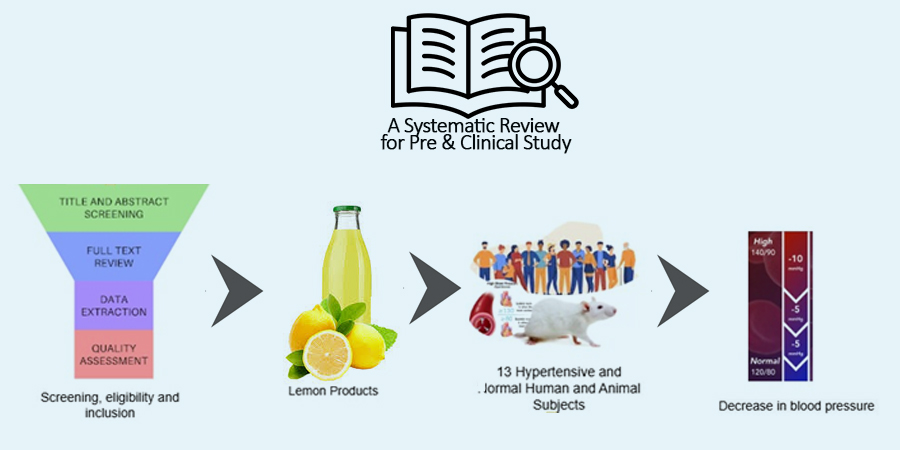
Hypertension prevalence and its cardiometabolic complications continue to rise, yet evidence syntheses have not clearly mapped how lemon (Citrus limon) intervention form, dose, and duration relate to blood pressure and biomarker responses, limiting translation into practical dietary guidance. This PRISMA 2020 systematic review synthesized evidence on lemon interventions for systolic/diastolic blood pressure (SBP/DBP) and biomarkers in hypertensive or elevated-blood-pressure populations. Searches of Scopus and PubMed, supplemented by ScienceDirect, relevant platforms, and Google Scholar, were conducted in December 2024–January 2025. Randomized controlled trials of lemon juice, extracts, peel preparations, or essential-oil aromatherapy versus placebo/usual care/other citrus/no intervention were eligible; multi-ingredient regimens containing lemon were extracted but interpreted separately. Screening and extraction used Rayyan, and quality was assessed using the Effective Public Health Practice Project (EPHPP) domains. Thirteen studies met criteria; heterogeneity in formulations, dosing, and outcome reporting precluded meta-analysis, so narrative synthesis was applied. Fresh lemon juice and lemon extracts showed the consistent SBP/DBP reductions, especially with higher doses and durations ≥2–4 weeks, whereas short-term or low-dose regimens more often yielded null results; aromatherapy and peel-powder capsules showed mixed effects. Certainty was limited to moderate due to risk of bias and diversity of interventions. Lemon may be considered a dietary adjunct in lifestyle management, not a replacement for antihypertensive therapy, and may be communicated through halalan thayyiban self-care framing.
Downloads
References
Abu-Ras, W., Aboul-Enein, B. H., Almoayad, F., Benajiba, N., & Dodge, E. (2024). Mosques and public health promotion: a scoping review of faith-driven health interventions. Health Education & Behavior, 51(5), 677-690. https://doi.org/10.1177/10901981241252800
Ahmad, T., Javed, A., Khan, T., Althobaiti, Y., Ullah, A., Almutairi, F., & Shah, A. (2022). Investigation into the antihypertensive effects of diosmetin and its underlying vascular mechanisms using rat model. Pharmaceuticals, 15(8), 951. https://doi.org/10.3390/ph15080951
Downloads
Published
How to Cite
Issue
Section
License
Copyright (c) 2026 Yusma Indah Jayadi, Ahmad Sulaeman, Eny Palupi, Mira Dewi, Hardinsyah Hardinsyah

This work is licensed under a Creative Commons Attribution-NonCommercial-ShareAlike 4.0 International License.
Authors retain copyright and grant the journal right of first publication with the work simultaneously licensed under a Creative Commons Attribution-NonCommercial-ShareAlike 4.0 International License that allows others to share the work with an acknowledgment of the work's authorship and initial publication in this journal.
Authors are able to enter into separate, additional contractual arrangements for the non-exclusive distribution of the journal's published version of the work (e.g., post it to an institutional repository or publish it in a book), with an acknowledgment of its initial publication in this journal.
Authors are permitted to publish their work online in third parties as it can lead to wider dissemination of the work.