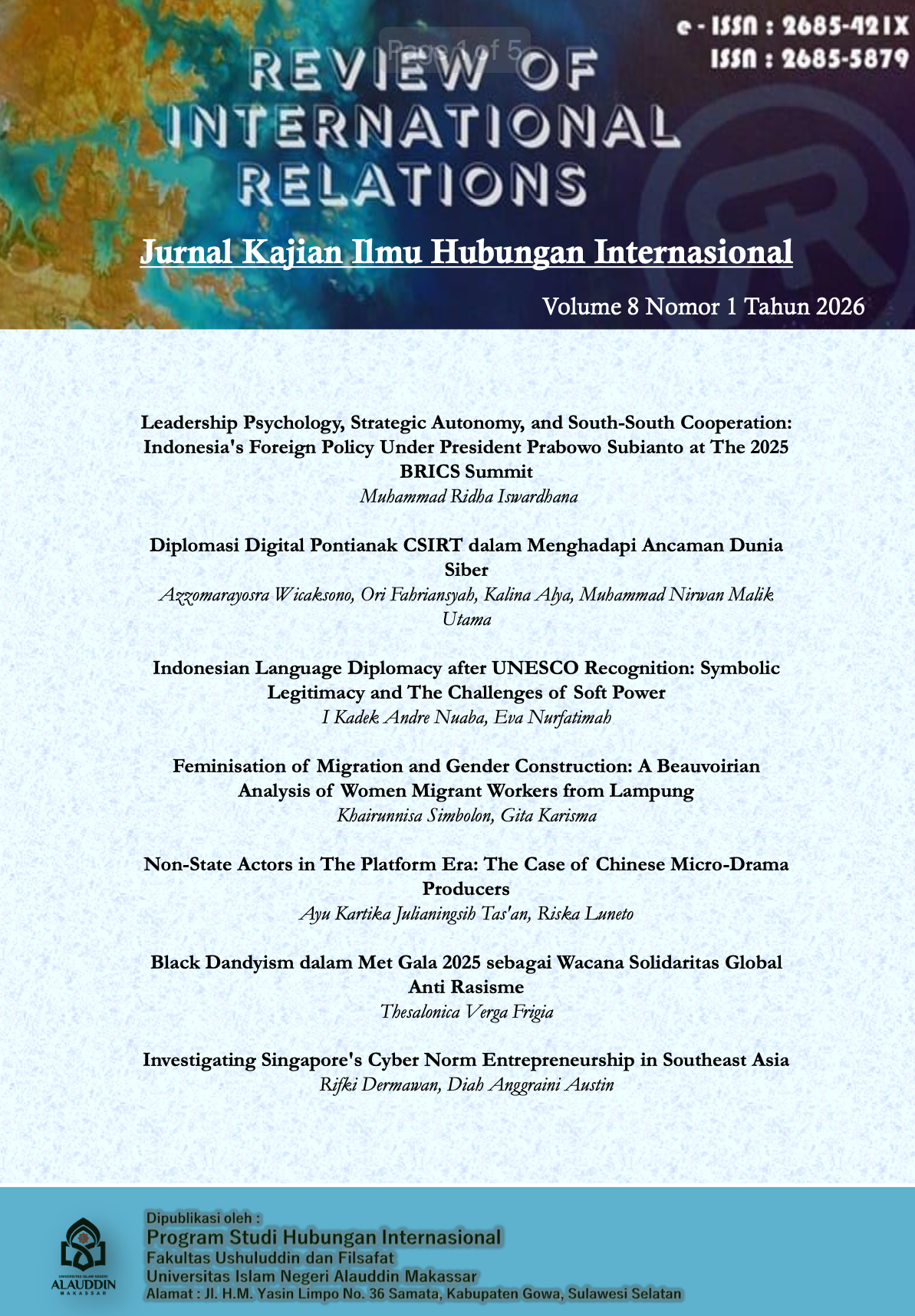
Diplomasi Digital Pontianak CSIRT dalam Menghadapi Ancaman Dunia Siber
DOI:
https://doi.org/10.24252/rir.v8i1.67123Keywords:
Computer Security Incident response Team, Cyber Security, E-governance, Digital DiplomacyAbstract
Digital transformation has driven changes in diplomatic practices, shifting from traditional models toward more collaborative and network-based approaches. In this context, digital diplomacy serves not only as a foreign policy instrument but also as a mechanism for strengthening cybersecurity governance. This study aims to analyze the position and role of the Pontianak Computer Security Incident Response Team (CSIRT) within the framework of Indonesia’s digital diplomacy. This study employs a qualitative approach using a descriptive-analytical method based on a literature review. The analysis is conducted by referencing the concepts of digital diplomacy, soft power, and global digital governance. The research findings indicate that the Pontianak CSIRT plays a crucial role in implementing cybersecurity at the local level, particularly in incident response, enhancing digital literacy, and fostering cross-sectoral collaboration. However, this role remains largely operational and operates under centralized coordination, thus not yet fully reflecting that of an autonomous diplomatic actor. Additionally, there is a gap between the concept of network-based digital diplomacy and practices at the regional level, which still face resource and coordination constraints. This study emphasizes that the effectiveness of Indonesia’s digital diplomacy depends on strengthening the capacity of local actors and developing more inclusive and decentralized governance.
Downloads
References
Bjola, C., & Holmes, M. (2015). Digital diplomacy: Theory and practice. Routledge.
Badan Siber dan Sandi Negara. (2023). Laporan kinerja keamanan siber nasional. BSSN.
Creswell, J. W. (2014). Research Design: Qualitative, Quantitative, and Mixed Methods Approaches (4th ed.). Sage Publications.
DeNardis, L. (2014). The global war for internet governance. Yale University Press.
Haryanto, A. T. (2021). Diplomasi digital Indonesia dalam menghadapi tantangan global. Jurnal Hubungan Internasional, 14(2), 145–160.
Kementerian Komunikasi dan Informatika Republik Indonesia. (2024). Laporan tahunan keamanan siber.
Kurniawan, D. (2022). Kolaborasi multiaktor dalam tata kelola digital. Jurnal Kebijakan Publik, 13(1), 45–60.
Nugraha, A., & Firmansyah, M. (2021). Peran CSIRT dalam keamanan siber. Jurnal Keamanan Siber Indonesia, 3(1), 1–12.
Nye, J. S. (2004). Soft power. Public Affairs.
Pemerintah Kota Pontianak. (2022). Peraturan wali kota Pontianak tentang sistem pemerintahan berbasis elektronik.
Pratama, R., & Yani, Y. M. (2020). Transformasi diplomasi publik. Jurnal Ilmu Sosial dan Ilmu Politik, 24(1), 35–50.
Putri, R. A., & Hidayat, T. (2021). Literasi digital dan ketahanan siber. Jurnal Komunikasi Pembangunan, 19(2), 200–214.
Rahman, F. (2023). Implementasi CSIRT di Indonesia. Jurnal TIK, 12(1), 55–68.
Raymond, M., & DeNardis, L. (2015). Multistakeholderism: Anatomy of an inchoate global institution. International Theory, 7(3), 572–616. https://doi.org/10.1017/s1752971915000081
Santoso, H., & Putri, N. E. (2021). Multi-level governance keamanan siber. Jurnal Administrasi Publik, 18(3), 300–315.
Setiawan, B. (2022). Strategi keamanan siber. Jurnal Informatika, 7(2), 89–102.
Downloads
Published
How to Cite
Issue
Section
License
Copyright (c) 2026 Azzomarayosra Wicaksono, Ori Fahriansyah, Kalina Alya, Nirwan Malik Utama

This work is licensed under a Creative Commons Attribution-ShareAlike 4.0 International License.