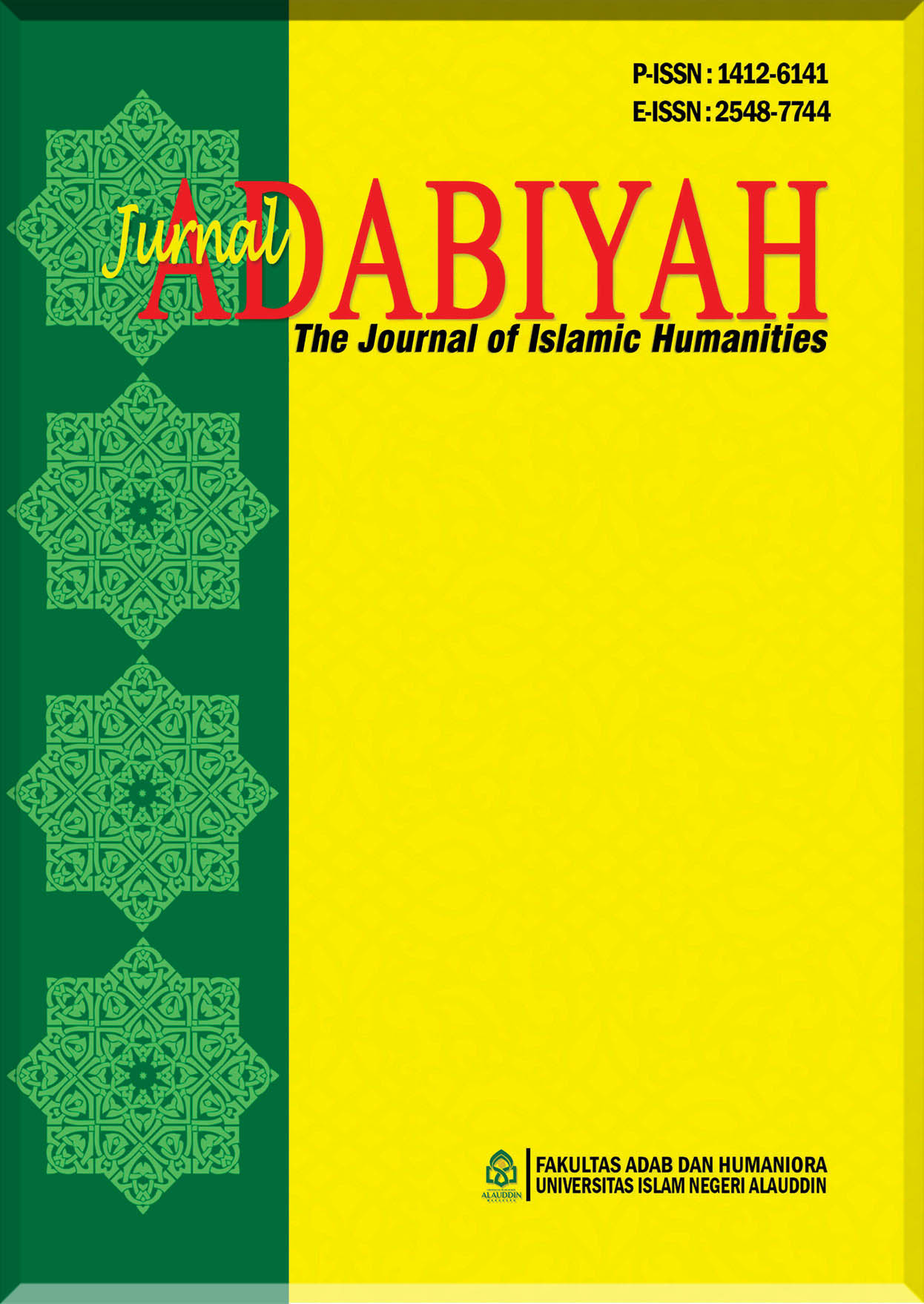
Islamic Eco-Theology in the Age of Climate Crisis: A Critical Reading of Ali Jum‘ah’s Environmental Thought
DOI:
https://doi.org/10.24252/jad.v26i1a2Keywords:
Islamic Ecotheology, Ali Jum‘ah, Sufism, Environmental Ethics, Mahabbah, Climate CrisisAbstract
Numerous studies have examined ecological ethics from an Islamic perspective; however, Ali Jum‘ah’s thought, particularly his contributions to an epistemological and spiritual framework of ecology, has not yet received sufficient critical attention in the academic literature. This research examines the ecological thought of Sheikh Ali Jum‘ah through content analysis of his book al-Bi’ah wa al-Ḥifẓ ‘Alayhā min Manẓūr al-Islāmī. The research argues that Ali Jum‘ah positions mahabbah (love) as the highest ethical form of the human–environment relationship, articulated through tajallī (divine manifestation in creation) and jamāliyyah (beauty as contemplative access). These concepts frame nature as a reflection of the asmā’ Allāh and foster an affective bond between humans and the cosmos. This research contributes by conceptualizing mahabbah as a substantive ecological ethic and by identifying a shift from a normative fiqh-oriented approach toward a Sufi-based framework of cosmic ethics as a foundation for ecological sustainability in Islam.
الملخص
تناولت دراساتٌ عديدة الأخلاقيات البيئية من منظور إسلامي، غير أنّ فكر علي جمعة—ولا سيما إسهاماته في بناء إطار بيئي ذي طابع معرفي وروحي—لم يحظَ بعدُ باهتمام نقدي كافٍ في الأدبيات الأكاديمية. تهدف هذه الدراسة إلى تحليل التصور البيئي للشيخ علي جمعة من خلال تحليل المحتوى لكتابه البيئة وحفظها من منظور إسلامي. وتُبيّن الدراسة أنّ علي جمعة يُؤسِّس علاقة الإنسان بالبيئة على مفهوم المحبّة بوصفها أعلى قيمة أخلاقية، وذلك من خلال مفهومي التجلّي والجماليّة بوصفهما مدخلين للتأمّل. وتُقدَّم الطبيعة في هذا الإطار باعتبارها مرآةً لأسماء الله الحسنى، بما يُنشئ رابطةً وجدانية وروحية بين الإنسان والكون. وتسهم هذه المقالة في بلورة مفهوم المحبّة بوصفه أخلاقًا بيئيةً جوهرية، وفي الكشف عن تحوّلٍ إبستمولوجي من مقاربة فقهية معيارية إلى إطار صوفي قيمي يقوم على أخلاقيات كونية تُشكّل أساسًا للاستدامة البيئية في الفكر الإسلامي.
Abstrak
Berbagai studi telah mengkaji etika ekologis dari perspektif Islam; namun pemikiran Ali Jum‘ah, khususnya kontribusinya dalam membangun kerangka ekologi yang bersifat epistemologis dan spiritual belum memperoleh perhatian kritis yang memadai dalam literatur akademik. Penelitian ini mengkaji pemikiran ekologis Syekh Ali Jum‘ah melalui analisis isi terhadap karyanya al-Bi’ah wa al-Ḥifẓ ‘Alayhā min Manẓūr al-Islāmī. Penelitian ini berargumen bahwa Ali Jum‘ah menempatkan mahabbah (cinta) sebagai bentuk etika tertinggi dalam relasi manusia–lingkungan, yang dirumuskan melalui konsep tajallī (manifestasi ilahi dalam ciptaan) dan jamāliyyah (keindahan sebagai jalan kontemplasi). Kedua konsep ini memandang alam sebagai refleksi dari asmā’ Allah serta menumbuhkan ikatan afektif antara manusia dan kosmos. Penelitian ini berkontribusi dengan mengonsepsikan mahabbah sebagai etika ekologis yang substantif serta mengidentifikasi pergeseran dari pendekatan normatif-legalistik (fiqh) menuju kerangka etika kosmik berbasis tasawuf sebagai landasan keberlanjutan ekologis dalam Islam.
Downloads
References
(Ed.), Carol J. Adams & Lori Gruen. Ecofemisim: Feminist Intersection with Other Animal & The Earth. Bloomsbury Academic. Vol. 1999, 2022.
Bee, Michele, and Maxime Desmarais-Tremblay. “The Birt of Homo Economicus: Methodologocal Debate on The Economic Agent from J. S. Mill to V. Pareto.” Journal of the History of Economic Thought 45, no. 1 (2023): 1–26. https://doi.org/10.1017/S1053837221000535.
Belz, Frank Martin, and Wenke Baumbach. “Netnography as a Method of Lead User Identification.” Creativity and Innovation Management 19, no. 3 (2010): 304–13. https://doi.org/10.1111/j.1467-8691.2010.00571.x.
Downloads
Published
How to Cite
Issue
Section
License
Copyright (c) 2026 Darlis, Nasaruddin Umar, Nur Arfiyah Febriani, Muhammad Hariyadi, Ahmad Arief

This work is licensed under a Creative Commons Attribution-NonCommercial-ShareAlike 4.0 International License.
COPYRIGHT AND LICENSE STATEMENT
COPYRIGHT
Jurnal Adabiyah is published under the terms of the Creative Commons Attribution license. Authors hold the copyright and retain publishing rights without restriction to their work. Users may read, download, copy, distribute, and print the work in any medium, provided the original work is properly cited.
LICENSE TO PUBLISH
1. License
The use of the article will be governed by the Creative Commons Attribution license as currently displayed on http://creativecommons.org/licenses/by/4.0.
2. Author’s Warranties
The author warrants that the article is original, written by stated author/s, has not been published before, contains no unlawful statements, does not infringe the rights of others, is subject to copyright that is vested exclusively in the author and free of any third party rights, and that any necessary written permissions to quote from other sources have been obtained by the author(s).
3. User Rights
Under the Creative Commons Attribution license, the users are free to download, reuse, reprint, modify, distribute and/or copy the content for any purpose, even commercially, as long as the original authors and source are cited. No permission is required from the authors or the publishers.
4. Co-Authorship
If the article was prepared jointly with other authors, the corresponding author warrants that he/she has been authorized by all co-authors, and agrees to inform his/her co-authors of the terms of this statement.
5. Miscellaneous
Jurnal Adabiyah may conform the article to a style of punctuation, spelling, capitalization, and usage that it deems appropriate. The author acknowledges that the article may be published so that it will be publicly accessible and such access will be free of charge for the readers.