Submission


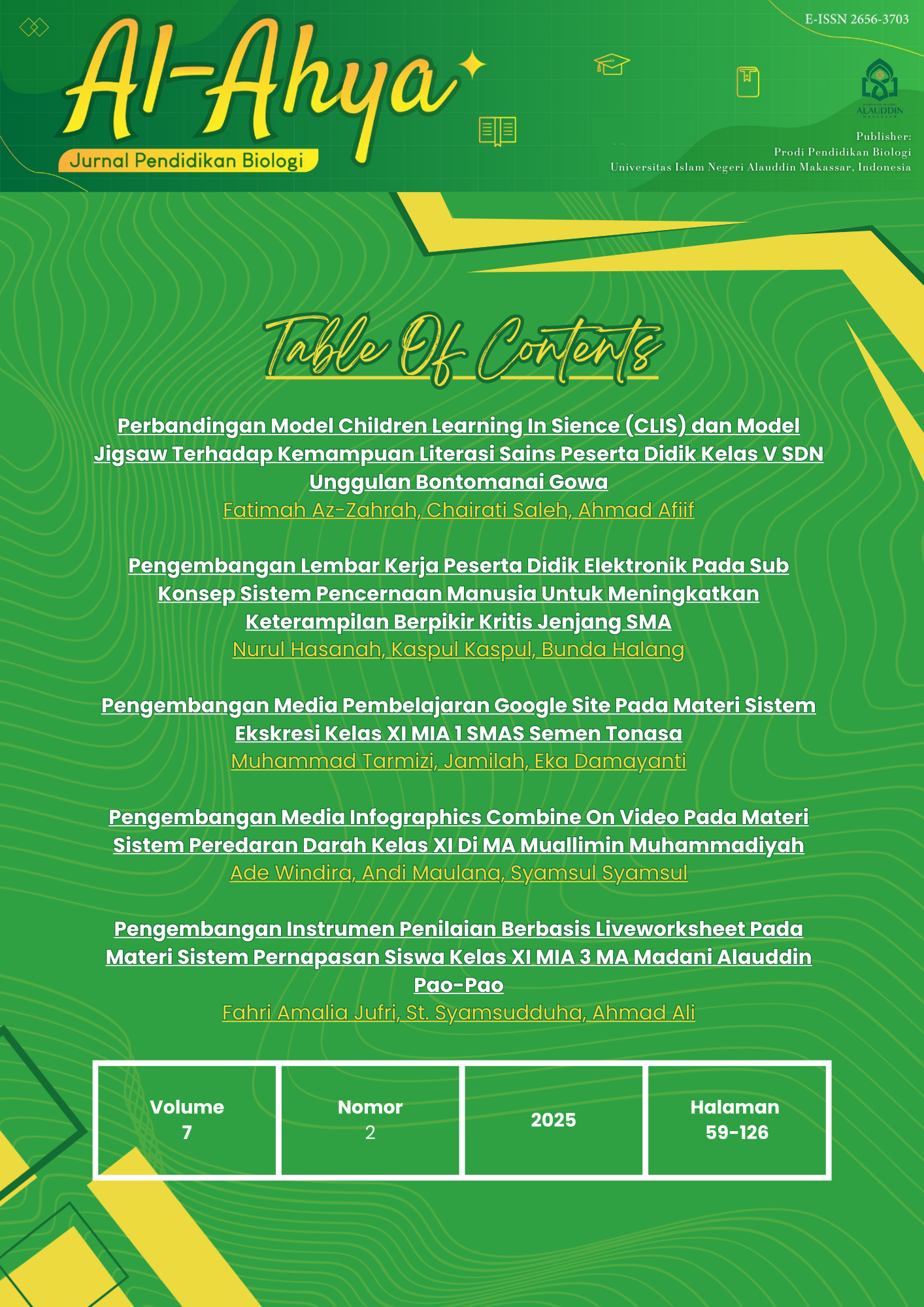
These studies present a diverse range of innovations in biology education aimed at enhancing students’ scientific literacy, critical thinking, and understanding of human physiology. The first study compares the effectiveness of the Children Learning in Science (CLIS) model and the Jigsaw model in improving science literacy among 5th-grade students at SDN Unggulan Bontomanai Gowa. The second study focuses on developing an electronic student worksheet (e-LKPD) on the human digestive system to foster critical thinking skills at the senior high school level. The third study explores the development of Google Site–based learning media for teaching the excretory system to 11th-grade students at SMAS Semen Tonasa. The fourth study investigates the use of infographic-combined video media to support learning about the circulatory system for 11th-grade students at MA Muallimin Muhammadiyah. Finally, the fifth study develops an assessment instrument using Liveworksheet to measure student understanding of the respiratory system among 11th-grade students at MA Madani Alauddin Pao-Pao.
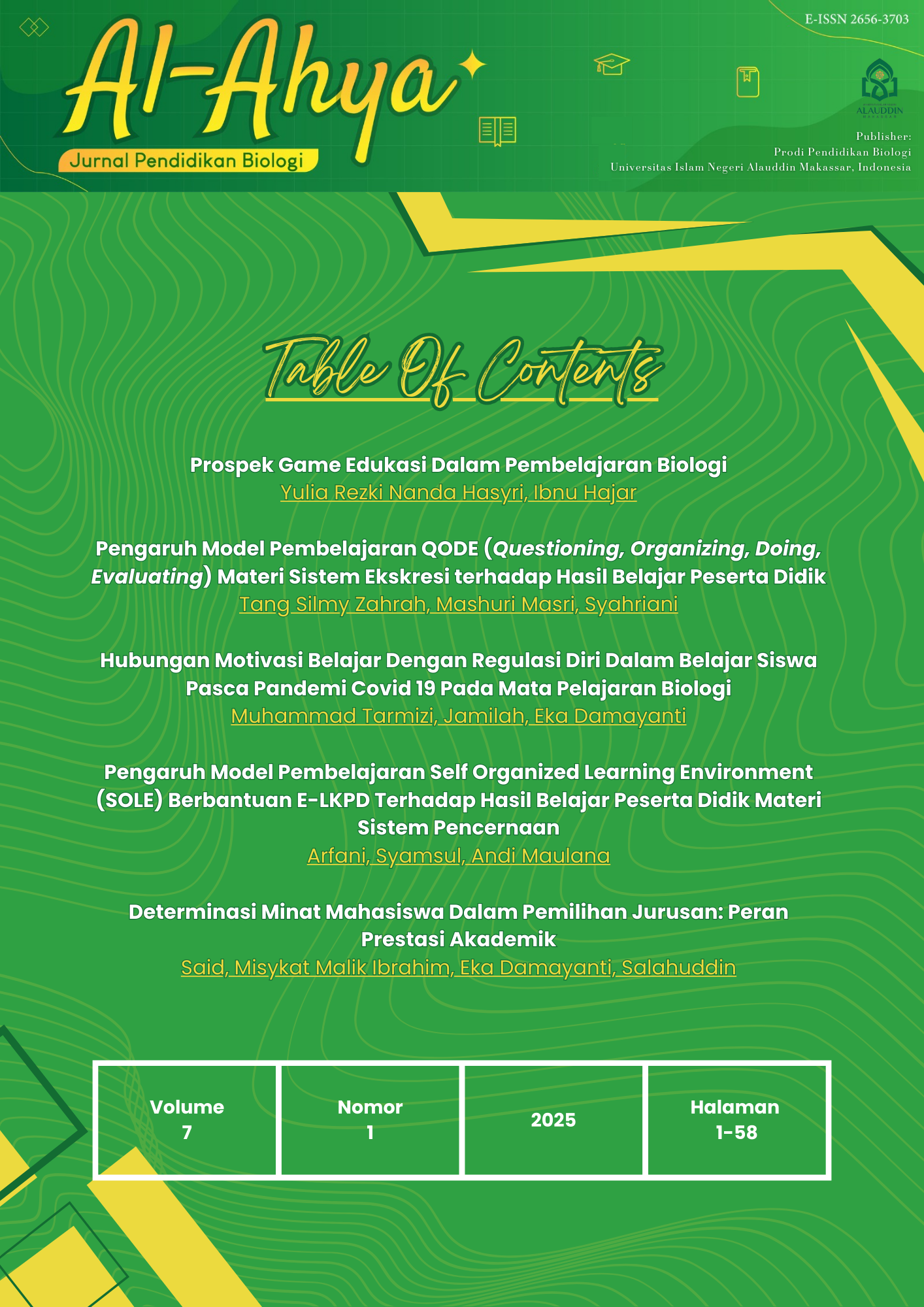
These studies explore various models and methods of biology teaching to improve student understanding. The first study examines the prospects of educational games in biology learning, with the aim of exploring the prospects of using educational games in biology learning. The second study examines the influence of the QODE (Questioning, Organizing, Doing, Evaluating) learning model on the learning outcomes of 11th grade science students at SMA Negeri 9 Pangkep. The third study examines the relationship between learning motivation and self-regulation in students' learning after the COVID-19 pandemic in biology. The fourth study investigates the effect of the self-organized learning environment (SOLE) model assisted by e-LKPD on students' learning outcomes in the digestive system. Finally, the fifth study determines students' interest in choosing a major: the role of academic achievement.
Submission
Tools


Form for Author


Visitors
Indexing Site


