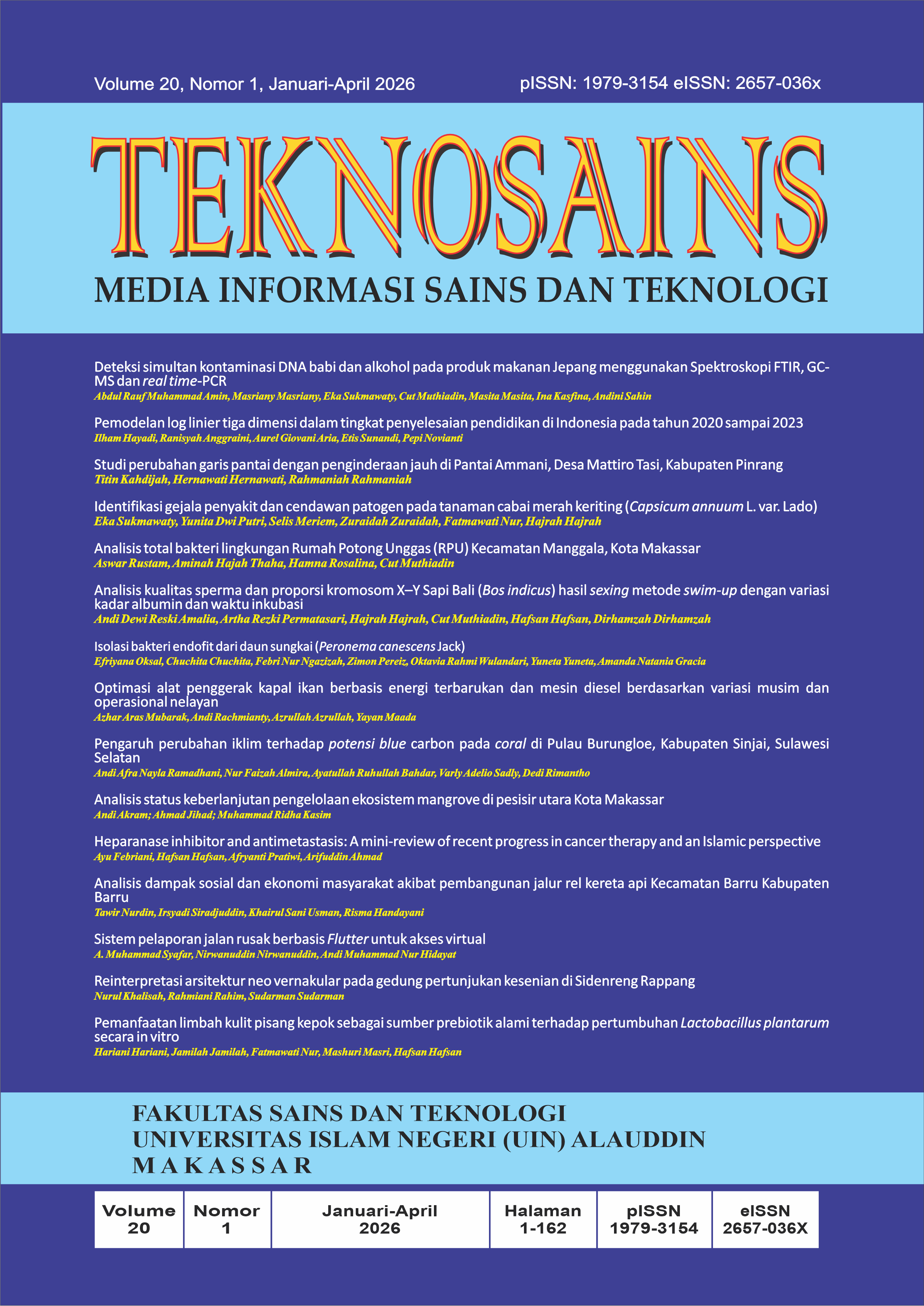
Heparanase inhibitor and antimetastasis: A mini-review of recent progress in cancer therapy and an Islamic perspective
DOI:
https://doi.org/10.24252/teknosains.v20i1.63256Keywords:
Biomarkers, Cancer metastasis, Heparanase inhibitors, ImmunotherapyAbstract
Heparanase is a critical enzyme involved in cancer metastasis through its role in degrading the extracellular matrix (ECM), which allows cancer cells to invade surrounding tissues and spread to distant organs. This mini-review explores recent advancements in understanding heparanase's function in cancer progression and the development of targeted therapies aimed at inhibiting its activity. Heparanase inhibitors, such as Roneparstat, have demonstrated significant potential in reducing tumor metastasis and improving the efficacy of existing treatments, including chemotherapy and immunotherapy. By altering the tumor microenvironment, these inhibitors enhance immune cell infiltration, improving response rates in otherwise resistant tumors. Additionally, heparanase has emerged as a promising biomarker for early cancer detection and prognosis, offering a new dimension to personalized treatment approaches. The review also incorporates an Islamic ethical perspective, emphasizing the obligation to preserve life and alleviate suffering through medical innovation. Continued research in this field is essential to refine therapeutic strategies and improve outcomes, particularly in cancers with high metastatic potential.
Downloads
Published
How to Cite
Issue
Section
License
Copyright (c) 2026 Ayu Febriani, Hafsan Hafsan, Afryanti Pratiwi, Arifuddin Ahmad

This work is licensed under a Creative Commons Attribution 4.0 International License.
This license allows authors to copy, redistribute, remix, transform, and build upon the Work, in any format or medium, for any purpose including commercial purpose, on a perpetual basis provided they credit the Work and the authors. Authors
must explain any changes that were made from the original and may not suggest the authors endorse the use. The resultant work must be made available under the same terms, and must include a link to the CC BY 4.0 International License.