Community education for solid waste management
Knowledge gains in rural area, Pangkep, Indonesia
DOI:
https://doi.org/10.24252/sociality.v5i1.64367Keywords:
community, educational program, educational posters, information boards, waste managementAbstract
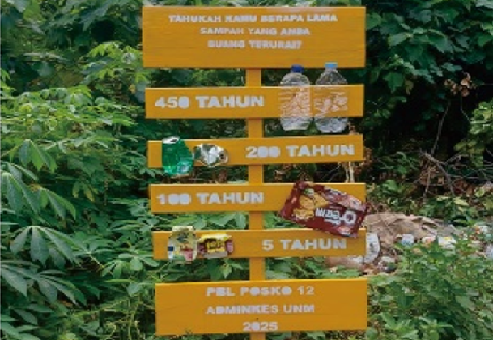
Although community education is increasingly used to improve solid waste practices, evidence from rural Indonesian villages remains limited, and few programs combine Participatory Rural Appraisal (PRA) with rapid pre–post evaluation; this initiative addresses that gap by testing a community-based educational program in Balocci Baru Village, Pangkep Regency, Indonesia. The program, entitled “Smart Waste Management, Smart Environmental Stewardship,” aimed to strengthen community knowledge and understanding of proper, responsible, and sustainable waste management to reduce environmental contamination and downstream public health risks. Using a participatory PRA approach, educational sessions were delivered to 22 participants (community members, health cadres, and local leaders) and evaluated through pre-test and post-test measurements. Visual reinforcement tools (posters and informational boards) were integrated to support comprehension and recall. Post-intervention results indicated a clear improvement in knowledge distribution, with no participants remaining in the low-knowledge category. Statistical testing using the Wilcoxon signed-rank test confirmed a significant increase in knowledge scores (p < 0.05). These findings suggest that participatory, visually supported education can be an effective entry point for community-driven waste management in rural settings, with potential adaptation for peri-urban and urban neighborhoods where waste generation and exposure pathways differ but behavior change remains central to environmental health promotion.
References
Ansari, J., Aggarwal, I., Kashyap, H., & Sahu, D. (2024). Sustainable solution in solid waste management. International Research Journal of Computer Science, 11(11), 659–665. https://doi.org/10.26562/irjcs.2024.v1111.05
Aprisanti, R., Mulyadi, A., Siregar, S. H., Putra, R. M., Hermawan, C., & Sagiarti, T. (2024). Peningkatan pengetahuan masyarakat tentang kesehatan lingkungan melalui program edukasi di Kabupaten Kuantan Singingi. Bhakti Nagori: Jurnal Pengabdian Kepada Masyarakat, 4(2), 324–329. https://doi.org/10.36378/bhakti_nagori.v4i2.4145
Aulia, D. C., Situmorang, H. K., Fauzy, A., Prasetya, H., Fadilla, A., Nisa, A. S., Khoirunnisa, A., Farhan, D., Nindya, D. N., Purwantari, H., Jasmin, I. O. D., Akbar, J. A., Ginting, N. M. C. B., Lubis, R. F., & Pengestiara, G., Z. (2021). Peningkatan pengetahuan dan kesadaran masyarakat tentang pengelolaan sampah dengan pesan Jepapah. PengmasKesmas: Jurnal Pengabdian Kepada Masyarakat, 1(1), 62–70. https://doi.org/10.31849/pengmaskesmas.v1i1/5516
Byrnes, D., Blum, L., & Walker, W. (2022). Undisciplining environmental communication pedagogy: Toward environmental and epistemic justice in the interdisciplinary sustainability classroom. Sustainability, 15(1), 514. https://doi.org/10.3390/su15010514
Cahyaningtyas, C., Widayanti, A., Zahra, M., Widayanti, A., Miranda, Y., & Rusdianto, R. (2023). Wahana edukasi kreatif sebagai sarana peningkatan life skill siswa SD bernuansa alam Desa Darsono. Adi Widya Jurnal Pengabdian Masyarakat, 7(2), 259–268. https://doi.org/10.33061/awpm.v7i2.9813
Chen, M. (2022). Integrating the extended theory of planned behavior model and the food-related routines to explain food waste behavior. British Food Journal, 125(2), 645–661. https://doi.org/10.1108/BFJ-07-2021-0788
Csesznek, C. (2021). Photovoice as a tool for increasing awareness and participation in local-based environmental education. Series VII - Social Sciences and Law, 14(63), 55–66. https://doi.org/10.31926/but.ssl.2021.14.63.1.6
Effendi, H., & Murwonugroho, W. (2025). Mural-based revitalization of community reading parks to enhance literacy and community participation in Ambarjaya Village. Community Empowerment, 10(7), 1475–1482. https://doi.org/10.31603/ce.13982
Eshete, A., Haddis, A., & Mengistie, E. (2024). Investigation of environmental and health impacts solid waste management problems and associated factors in Asella town, Ethiopia. Heliyon, 10(6), e28203. https://doi.org/10.1016/j.heliyon.2024.e28203
Fakhriyah, Annisa, A., Fazila, M. S., Azizah, N., Munawaroh, Y. D., & Noor, I. H. (2025). PEDULILOKA: Edukasi pengelolaan sampah dan pelatihan pembuatan ECO-Enzyme di Desa Paku Alam Kabupaten Banjar. Reswara: Jurnal Pengabdian Kepada Masyarakat, 6(2), 1050–1061. https://doi.org/10.46576/rjpkm.v6i2.6453
Fei, X., He, P., Ma, H., & Qiu, Y. (2024). Enhancing urban waste management: Development and application of smart garbage bin technologies. TE, 1(5). https://doi.org/10.61173/jprvvr82
Frond, H., Gutierrez, R., Debreceni, S., & Rochman, C. (2024). Home waste audit: A community science activity to increase waste literacy and reduce household waste. Community Science, 3(3). https://doi.org/10.1029/2024csj000080
Hakim, A., & Hidayati, D. (2023). Operasional bank sampah dalam pembentukan gaya hidup berkelanjutan. Jurnal Syntax Admiration, 4(11), 2262–2272. https://doi.org/10.46799/jsa.v4i11.921
Haruna, U., Danladi, M., Bakoji, B., Nma, M., & Sarkile, K. (2020). Sustainable development planning: Examining the mismatch of urban solid waste management services in Bauchi Metropolis. CER. https://doi.org/10.7176/cer/12-3-06
Hines, E., Daniel, B., & Bobilya, A. (2020). Environmental views of the Eastern Band of Cherokee Indians. Ecopsychology, 12(2), 118–127. https://doi.org/10.1089/eco.2019.0051
Januchowski-Hartley, S., Giannoulatou, I., Evans, J., & Howells, S. (2025). Combining visual and linguistic methods to cultivate and communicate river meanings with young children. People and Nature, 7(8), 1840–1850. https://doi.org/10.1002/pan3.70041
Khotimah, S., Nasruddin, N., Santi, H., Padly, A., & An-Nafi, A. (2023). Community empowerment through the 3R movement and the establishment of a waste bank in Wirittasi Village. Journal Transnational Universal Studies, 1(11), 919–927. https://doi.org/10.58631/jtus.v1i11.70
Kurniawan, I., Mujtahidah, Mappanyukki, A. A., Ridha, M., & Afdhal, M. (2025). Edukasi kesehatan berbasis Dagusibu meningkatkan pemahaman masyarakat dalam pengelolaan obat yang baik dan benar. Jurnal Abdimas Indonesia, 7(2), 178–190. https://doi.org/10.26751/jai.v7i2.3052
Kurniawan, T., Avtar, R., Singh, D., Xue, W., Othman, M., Goh, H., … Kern, A. (2021). Reforming MSWM in Sukunan (Yogjakarta, Indonesia): A case-study of applying a zero-waste approach based on circular economy paradigm. Journal of Cleaner Production, 284, 124775. https://doi.org/10.1016/j.jclepro.2020.124775
Liu, Q., Xu, Q., Shen, X., Chen, B., & Esfahani, S. (2022). The mechanism of household waste sorting behaviour—A study of Jiaxing, China. International Journal of Environmental Research and Public Health, 19(4), 2447. https://doi.org/10.3390/ijerph19042447
Maalouf, A., & Agamuthu, P. (2023). Waste management evolution in the last five decades in developing countries – A review. Waste Management & Research: The Journal for a Sustainable Circular Economy, 41(9), 1420–1434. https://doi.org/10.1177/0734242X231160099
Mardalena, Mustabela, I., Saputri, M. A., A’ini, N., Purwati, Y., Imelia, I., Apriani, D., Agustin, D., Indriani, Hasanah, L., & Solikhah, A. I. (2025). Edukasi pengelolaan sampah rumah tangga sebagai upaya pencegahan pembakaran melaui promosi kesehatan di Desa Permata Baru, Indralaya Utara. Jurnal Pengabdian Masyarakat, 1(1), 19–23. https://doi.org/10.32502/se.v2i1.9475
Meilani, W., & Harianti, R. (2024). Pengaruh penyuluhan pemilihan sampah melalui media poster terhadap peningkatan pengetahuan siswa SDN Wanajaya III Karawang. Al-Tamimi Kesmas: Jurnal Ilmu Kesehatan Masyarakat (Journal of Public Health Sciences), 13(1), 129–138. https://doi.org/10.35328/kesmas.v13i1.2678
Mugambe, R., Nuwematsiko, R., Ssekamatte, T., Nkurunziza, A., Wagaba, B., Isunju, J., Buregyeya, E. (2022). Drivers of solid waste segregation and recycling in Kampala slums, Uganda: A qualitative exploration using the behavior centered design model. International Journal of Environmental Research and Public Health, 19(17), 10947. https://doi.org/10.3390/ijerph191710947
Oduro-Appiah, K., Afful, A., & Osei-Tutu, H. (2022). Assessment of belief constructs to support an intervention in municipal solid waste separation at the source in low–middle-income countries: Observations from the Greater Accra Region of Ghana. Recycling, 7(2), 17. https://doi.org/10.3390/recycling7020017
Omang, D., John, G., Inah, S., & Bisong, J. (2021). Public health implication of solid waste generated by households in Bekwarra Local Government area. African Health Sciences, 21(3), 1467–1473. https://doi.org/10.4314/ahs.v21i3.58
Pereira, M., Caiado, R., Quelhas, O., Lima, G., Filho, W., & Yparraguirre, I. (2021). A framework for sustainable and integrated municipal solid waste management: Barriers and critical factors to developing countries. Journal of Cleaner Production, 312, 127516. https://doi.org/10.1016/j.jclepro.2021.127516
Pisuttu, C., Adducci, F., Arena, S., Bigongiali, D., Callea, L., Carmignani, P., Lorenzini, G. (2024). A master’s course can emphasize circular economy in municipal solid waste management: Evidence from the University of Pisa. Sustainability, 16(5), 1966. https://doi.org/10.3390/su16051966
Pongpunpurt, P., Muensitthiroj, P., Pinitjitsamut, P., Chuenchum, P., Painmanakul, P., Chawaloesphonsiya, N., Poyai, T. (2022). Studying waste separation behaviors and environmental impacts toward sustainable solid waste management: A case study of Bang Chalong Housing, Samut Prakan, Thailand. Sustainability, 14(9), 5040. https://doi.org/10.3390/su14095040
Pradani, A. B., Yanuarti, R., Husin, H., Wati, N., Angraini, W., & Febriawati, H. (2025). Pengaruh edukasi pengelolaan sampah terhadap pengetahuan, sikap, dan perilaku warga menuju zero waste pada RT 20 Kelurahan Sawah Lebar Baru. Jurnal Mitra Rafflesia, 17(1), 19–23. https://doi.org/10.51712/mitraraflesia.v17i1.401
Przydatek, G. (2023). Recognition of systemic differences in municipal waste management in selected cities in Poland and the United States. Environmental Science and Pollution Research, 30(30), 76217–76226. https://doi.org/10.1007/s11356-023-27911-4
Rahmayanti, E., Haryanto, E. S., Cahyo, D. E. N., Ramadhansyah, I., & Sae, R. R. (2025). Pemberdayaan masyarakat dalam pengelolaan sampah berdasarkan konsep kewarganegaraan ekologis (ecological citizenship) melalui media film untuk menumbuhkan karakter peduli lingkungan. Indonesia Berdaya, 6(4), 903–916. https://doi.org/10.47679/ib.20251228
Rigó, L., Fabianová, J., Lokšík, M., & Mikušová, N. (2024). Utilising digital twins to bolster the sustainability of logistics processes in Industry 4.0. Sustainability, 16(6), 2575. https://doi.org/10.3390/su16062575
Rofiki, I., & Famuji, S. R. R. (2020). Kegiatan penyuluhan dan pemeriksaan kesehatan untuk membiasakan PHBS bagi warga Desa Kemantren. DINAMISIA: Jurnal Pengabdian Kepada Masyarakat, 4(4), 628–634. https://doi.org/10.31849/dinamisia.v4i4.3992
Rosa, M. K. A., Rodiah, Y., & Kurniawan, A. (2022). Edukasi pengelolaan sampah rumah tangga di Kelurahan Sawah Lebar Baru Kota Bengkulu. Abdi Reksa, 3(1), 52–58.
Rousta, K., Zisen, L., & Hellwig, C. (2020). Household waste sorting participation in developing countries—A meta-analysis. Recycling, 5(1), 6. https://doi.org/10.3390/recycling5010006
Saengchut, P., Viriya, H., & Kongritti, N. (2024). Source apportionment of microplastics in environment from sanitary landfill: A case study of Muangpak Municipality Landfill, Thailand. Journal of Ecological Engineering, 25(1), 278–284. https://doi.org/10.12911/22998993/175410
Salem, M., El-Halim, H., Refky, A., & Nassar, I. (2022). Potential of waste to energy conversion in Egypt. Journal of Electrical and Computer Engineering, 2022, 1–17. https://doi.org/10.1155/2022/7265553
Sánchez, R., Alonso-Muñoz, S., & Salgado, S. (2023). Circularity in waste management: A research proposal to achieve the 2030 Agenda. Operations Management Research, 16(3), 1520–1540. https://doi.org/10.1007/s12063-023-00373-0
Schmetz, A., Lee, T., Hoeren, M., Berger, M., Ehret, S., Zontar, D., Brecher, C. (2020). Evaluation of Industry 4.0 data formats for digital twin of optical components. International Journal of Precision Engineering and Manufacturing-Green Technology, 7(3), 573–584. https://doi.org/10.1007/s40684-020-00196-5
Shabani, T., & Jerie, S. (2023). Medical solid waste management status in Zimbabwe. Journal of Material Cycles and Waste Management, 25(2), 717–732. https://doi.org/10.1007/s10163-022-01578-4
Sharma, M., Joshi, S., Kannan, D., Govindan, K., Singh, R., & Purohit, H. (2020). Internet of Things (IoT) adoption barriers of smart cities’ waste management: An Indian context. Journal of Cleaner Production, 270, 122047. https://doi.org/10.1016/j.jclepro.2020.122047
Shrivastava, S., Rahayu, G., & Prihatiningsih, T. (2025). Training medical students in participatory rural appraisal methods using ADDIE framework. Journal of Education and Health Promotion, 14(1). https://doi.org/10.4103/jehp.jehp_443_24
Sugiharjo, S., Rusdiyana, E., Lestary, E., Setyowati, R., Widiyanto, W., & Az-Zahra, J. (2025). Identifying local action related to the initiative of adaptation to climate change. IOP Conference Series: Earth and Environmental Science, 1518(1), 012024. https://doi.org/10.1088/1755-1315/1518/1/012024
Suhaemi, M., Winarno, H., Winda, R., & Lestari, F. (2025). Pembentukan karakter peduli lingkungan melalui edukasi pengelolaan sampah di SDN Buah Gede. Prosiding Seminar Nasional Pengabdian Masyarakat LPPM Universitas Serang Raya, 2. https://doi.org/10.30656/senama.v2i.86
Szpilko, D., Gallegos, A., Naharro, F., Rzepka, A., & Remiszewska, A. (2023). Waste management in the smart city: Current practices and future directions. Resources, 12(10), 115. https://doi.org/10.3390/resources12100115
Thomas, M., Giannoulatou, I., Kocak, E., Tank, W., Sarnowski, R., Jones, P., Januchowski-Hartley, S. (2021). Reflections from the team: Co-creating visual media about ecological processes for young people. People and Nature, 3(6), 1272–1283. https://doi.org/10.1002/pan3.10241
Vanapalli, K., Sharma, H., Ranjan, V., Samal, B., Bhattacharya, J., Dubey, B., Goel, S. (2021). Challenges and strategies for effective plastic waste management during and post COVID-19 pandemic. Science of the Total Environment, 750, 141514. https://doi.org/10.1016/j.scitotenv.2020.141514
Wang, C., Liu, D., Li, Y., Wang, L., & Gu, W. (2020). A multidisciplinary perspective on the evolution of municipal waste management through text-mining: A mini-review. Waste Management & Research, 39(1), 32–42. https://doi.org/10.1177/0734242X20962841
Wu, L., Zhu, Y., & Zhai, J. (2022). Understanding waste management behavior among university students in China: Environmental knowledge, personal norms, and the theory of planned behavior. Frontiers in Psychology, 12. https://doi.org/10.3389/fpsyg.2021.771723
Yu, X., & Mangmeechai, A. (2023). Shaping e-waste recycling intentions through psychological motivation: An integrated study of the theory of planned behavior and the theory of value-belief-norm. Environment and Social Psychology, 9(3). https://doi.org/10.54517/esp.v9i3.2180
Downloads
Published
How to Cite
Issue
Section
License
Copyright (c) 2026 Irfan Kurniawan, Samsiana Samsiana, Mujtahidah Mujtahidah, Andi Atssam Mappanyuki, Muhammad Ridha Afdhal

This work is licensed under a Creative Commons Attribution-NonCommercial-ShareAlike 4.0 International License.