Ergonomic intervention among fishermen in Untia
Reducing musculoskeletal risks through education and workstation design
DOI:
https://doi.org/10.24252/sociality.v5i2.71711Keywords:
anthropometry, ergonomics, fishermen, musculoskeletal disorders, occupational healthAbstract
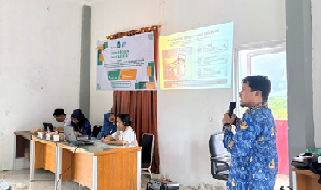
Work-related musculoskeletal disorders remain common among fishing communities, yet integrated interventions combining ergonomic risk assessment, worker education, and anthropometry-based assistive equipment are still limited. This community service program aimed to assess musculoskeletal disorder risks, improve fishermen’s knowledge and skills regarding ergonomic work practices, and develop an ergonomic lifting-and-carrying aid in Untia Village, Makassar. The program involved 30 fishermen. Musculoskeletal complaints and postural risks were assessed using the Nordic Body Map and Rapid Entire Body Assessment (REBA), while ergonomics and occupational safety and health education was delivered through lectures, discussions, and question-and-answer sessions. Knowledge and skills were evaluated using pre-test and post-test assessments. An ergonomic transport trolley was developed using the Need, Idea, Decision, Action (NIDA) approach based on fishermen’s anthropometric data. The assessment identified high-risk working postures related to manual lifting, awkward trunk positions, and repetitive movements. Mean knowledge and skill scores increased from 42.1 before the intervention to 74.4 after the intervention, representing a 76.8% improvement. These findings indicate that combining ergonomic education with anthropometrically designed assistive equipment can strengthen occupational health awareness and support the reduction of manual handling risks among fishermen. Continued post-implementation monitoring is needed to evaluate sustained effects on working posture and musculoskeletal risk.
References
Asghari, E., Dianat, I., Abdollahzadeh, F., Mohammadi, F., Asgharie, P., Jafarabadi, M. A., & Castellucci, H. I. (2019). Musculoskeletal pain in operating room nurses: Associations with quality of work life, working posture, socio-demographic and job characteristics. International Journal of Industrial Ergonomics, 72, 330–337.
Bontrup, C., Taylor, W. R., Fliesser, M., Visscher, R., Green, T., Wippert, P. M., & Zemp, R. (2019). Low back pain and its relationship with sitting behaviour among sedentary office workers. Applied Ergonomics, 81, 102894.
Brandl, C., Bender, A., Schmachtenberg, T., Dymke, J., & Damm, P. (2024). Comparing risk assessment methods for work-related musculoskeletal disorders with in vivo joint loads during manual materials handling. Scientific Reports, 14, 6068. https://doi.org/10.1038/s41598-024-56580-7
De Carvalho, D. E., Luca, K., Funabashi, M., Breen, A., Wong, A. Y. L., Johansson, M. S., Ferreira, M. L., Swab, M., Kawchuk, G. N., Adams, J., & Hartvigsen, J. (2020). Association of exposures to seated postures with immediate increases in back pain: A systematic review of studies with objectively measured sitting time. Journal of Manipulative and Physiological Therapeutics, 43(1), 1–12.
Driscoll, T., Jacklyn, G., Orchard, J., Passmore, E., Vos, T., Freedman, G., Lim, S., & Punnett, L. (2014). The global burden of occupationally related low back pain: Estimates from the Global Burden of Disease 2010 study. Annals of the Rheumatic Diseases, 73(6), 975–981.
Gawde, N. C. (2018). A study of musculoskeletal pain among hotel employees, India. Journal of Ecophysiology and Occupational Health, 18(1–2), 44–51.
Kee, D. (2021). Comparison of OWAS, RULA and REBA for assessing potential work-related musculoskeletal disorders. International Journal of Industrial Ergonomics, 83, 103140. https://doi.org/10.1016/j.ergon.2021.103140
Kee, D. (2022). Systematic comparison of OWAS, RULA, and REBA based on a literature review. International Journal of Environmental Research and Public Health, 19(1), 595. https://doi.org/10.3390/ijerph19010595
Khalid, F., Zahid, H., Ahmed, U., Ahmad, A., Gilani, S. A., & Hanif, K. (2017). Frequency of low back pain among school teachers of Lahore, Pakistan. International Journal of Scientific & Engineering Research, 8(12), 1776–1782.
Kumbea, N. P., Asrifuddin, A., & Sumampouw, O. J. (2021). Keluhan nyeri punggung bawah pada nelayan. Indonesian Journal of Public Health and Community Medicine, 2(1), 21–26.
Lewis, K. L., & Battglia, P. J. (2019). Knowledge of psychosocial factors associated with low back pain amongst health science students: A scoping review. Chiropractic & Manual Therapies, 27(1), 1–15.
Meucci, R. D., Fassa, A. G., & Xavier, F. N. M. (2015). Prevalence of chronic low back pain: Systematic review. Revista de Saúde Pública, 49, 1–10.
Nadifatuzzahroh, N., Mutiadesi, W. P., Nandaka, I. K. T., & Hisnindarsyah. (2024). Hubungan usia dan masa kerja terhadap low back pain pada nelayan Kampung Tengah Desa Banyusangka, Kabupaten Bangkalan. Jurnal Ilmiah Kesehatan Masyarakat: Media Komunikasi Komunitas Kesehatan Masyarakat, 16(2), 56–62. https://doi.org/10.52022/jikm.v16i2.650
Natosba, J., & Jaji. (2016). Pengaruh posisi ergonomis terhadap kejadian low back pain pada penenun songket di Kampung BNI 46. Jurnal Keperawatan Sriwijaya, 3, 8–16.
Pillai, D., & Haral, P. (2018). Prevalence of low back pain in sitting vs standing postures in working professionals in the age group of 30–60. International Journal of Health Sciences & Research, 8(10), 131.
Pillastrini, P., Mugnai, R., Bertozzi, L., Costi, S., Curti, S., Guccione, A., Mattioli, S., & Violante, F. S. (2010). Effectiveness of an ergonomic intervention on work-related posture and low back pain in video display terminal operators: A 3-year cross-over trial. Applied Ergonomics, 41(3), 436–443.
Pramesona, B. A. (2025). Edukasi ergonomi kerja untuk mencegah gangguan muskuloskeletal pada pekerja home industry pengolahan kopi bubuk di Kelurahan Pinang Jaya, Bandar Lampung. JPM (Jurnal Pengabdian Masyarakat) Ruwa Jurai, 10(1), 62–67.
Rachmawati, S., Suryadi, I., & Diajeng, R. (2021). Low back pain: Based on age, working period and work posture. KEMAS: Jurnal Kesehatan Masyarakat, 17(2). https://doi.org/10.15294/kemas.v17i2.26313
Risco-Ojeda, R. A., Moreno-Rojo, C., Figueroa-León, R. A., Chuqui-Diestra, S. R., Ponce-Ramirez, J. C., Villacresis-Huashuayo, A. G., Saavedra-Vera, J. V., Segura-Terrones, L. A., Palacios-Guarniz, S. J., Bedoya-Justo, E. V., Rodríguez-Yparraguirre, A. J., & Rodríguez-Yparraguirre, C. D. (2026). Postural ergonomic risk and biomechanical determinants in fish processing tasks: A REBA-based multivariate analysis. Safety, 12(3), 74. https://doi.org/10.3390/safety12030074
Sari, N. P. L. N. I., Mogi, T. I., & Angliadi, E. (2014). Hubungan lama duduk dengan keluhan low back pain pada operator komputer perusahaan travel di Manado. Jurnal e-Clinic, 3, 687–694.
Sirait, R. D., & Sirait, G. (2025). Perancangan alat bantu angkat jumbo bag proses mixing pada PT XYZ Batam. Jurnal Comasie, 13(2), 32–41.
Tarwaka. (2014). Ergonomi industri: Dasar-dasar pengetahuan ergonomi dan aplikasi di tempat kerja. Harapan Press.
Wahab, A. (2019). Faktor-faktor yang berhubungan dengan keluhan nyeri punggung bawah (low back pain) pada nelayan di Desa Batu Karas Kecamatan Cijulang Pangandaran. Biomedika, 11(1), 35–41. https://doi.org/10.23917/biomedika.v11i1.7599
Yang, H., Haldeman, S., Lu, M. L., & Baker, D. (2016). Low back pain prevalence and related workplace psychosocial risk factors: A study using data from the 2010 National Health Interview Survey. Journal of Manipulative and Physiological Therapeutics, 39(7), 459–472.
Downloads
Published
How to Cite
Issue
Section
License
Copyright (c) 2026 Iwan Suryadi, Juherah Juherah, Ain Khaer

This work is licensed under a Creative Commons Attribution-NonCommercial-ShareAlike 4.0 International License.