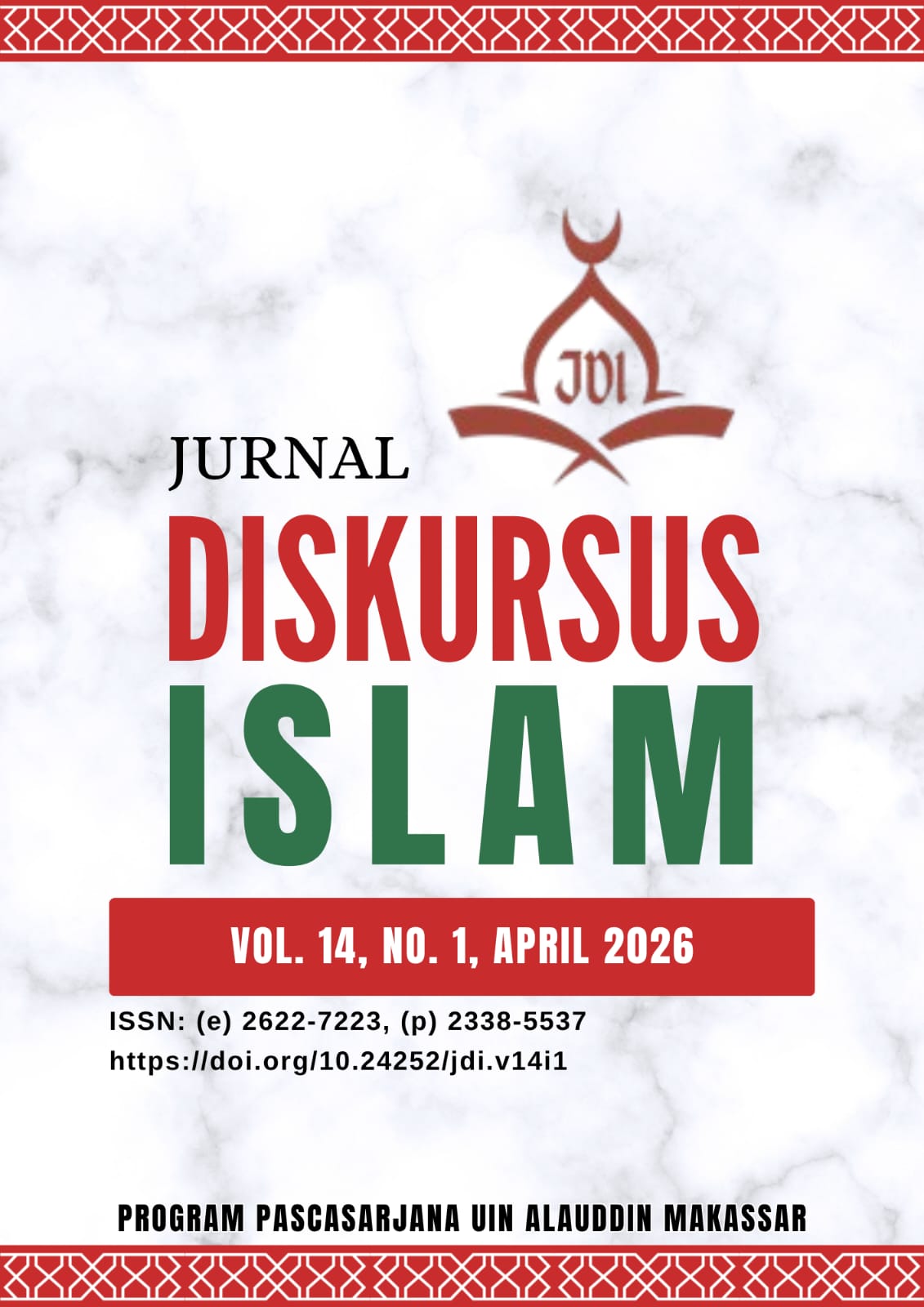
SOUTH KOREAN HISTORICAL AND POLITICAL STUDY OF SOUTH KOREAN MUSLIMS
DOI:
https://doi.org/10.24252/jdi.v14i1.66731Keywords:
Islam in South Korea, Muslim minority, Islamophobia, inclusive policies, social integrationAbstract
This study aims to analyze the historical and political dynamics of the Muslim community in South Korea by highlighting the tension between Islamophobia and the state's inclusive policies. This study fills a research gap because previous studies tended to be partial and failed to comprehensively integrate historical, political, and social aspects. The method used was a qualitative one with a historical approach through literature review. The research findings indicate that although the state guarantees religious freedom and promotes Muslim-friendly policies, the Muslim community still faces discrimination and social marginalization. Under these conditions, the Muslim community develops adaptation strategies through identity strengthening, education, and interfaith dialogue. This study concludes that there is a tension between inclusive state policies and exclusive social realities, which drives the formation of cultural adaptation patterns and resistance within the Muslim community in the process of social integration
References
Al Hakim, F. (2015). Muslim Korea Hidup Damai Berdampingan Antar Agama. https://minanews.net/muslim-korea-hidup-damai-berdampingan-antar-agama/
Alhuzaini, M. (2024). Jejak Islam Di Korea Selatan: Sejarah Panjang, Dakwah, Dan Perkembangan Masyarakat Muslim. 3, hlm. 56.
amalia, rahayu moza. (2022, Januari 21). Sejarah dan Agama Modern di Korea Selatan. Kukche Languages. https://www.kukchelanguages.com/post/sejarah-dan-agama-modern-di-korea-selatan
Candra, B. (2024, Juni 25). Sejarah Islam di Korea: Jalur Sutra hingga Masa Modern - Saung Korea. https://saungkorea.com/sejarah-islam-di-korea-jalur-sutra-hingga-masa-modern/
Fabilla Ramadhanty, Z., & Aswar, H. (2025). Fenomena Islamophobia Di Korea Selatan Pada Tahun 2016-2024. Rayah Al-Islam, 9(1), 156–177. https://doi.org/10.37274/rais.v9i1.1449
Frisca, F. (2015). 6 Fakta Sejarah Islam di Korea Selatan Abad ke-19 Hingga Kini—Lifestyle Fimela.com. https://www.fimela.com/lifestyle/read/2258402/6-fakta-sejarah-islam-di-korea-selatan-abad-ke-19-hingga-kini
Hakam, S. (2020). Masjid dan Diplomasi: Kisah Ringkas Pendirian Masjid Agung di Korea Selatan. Kajanglako.Com. https://kajanglako.com/
Kuntowijoyo. (2003). Metodologi Sejarah. PT. Tiara Wacana Yogya.
MA Korsel: Penolakan Wamil Diizinkan atas Alasan Agama atau Nurani. (2018, November 1). VOA Indonesia. https://www.voaindonesia.com/a/ma-korsel-penolakan-wamil-diizinkan-atas-alasan-agama-atau-nurani/4638303.html
Masrur, M. (2021, Februari 17). Perkembangan Islam Kontemporer di Korea Selatan | Bincang Syariah. BincangSyariah | Portal Islam Rahmatan lil Alamin. https://bincangsyariah.com/khazanah/perkembangan-islam-kontemporer-di-korea-selatan/
Mauludi, S. (2024, September 28). Islam di Korea Selatan: Perlahan Terus Tumbuh. Pondok Pesantren Daar El-Qolam 3 Kampus Dza ’Izza. https://www.daarelqolam3.sch.id/islam-di-korea-selatan-perlahan-terus-tumbuh/
Minardi, A. (2011). Korean Studies In Korea. Vol.II No. 1.
Musafak, M. (2024). Jalan Terjal Korea Selatan Menuju Samudera Biru Industri Halal. Masyarakat Ekonomi Syariah. https://www.ekonomisyariah.org/blog/2024/08/korea-selatan/
Nurhalisa, S. (2021). Sejarah Islam di Korea Selatan (2001-2019). hlm. 15.
Nurmalasari, S. (2015). Perkembangan Islam di Korea Selatan (1950-2006). https://repository.upi.edu/21598/
Podomi, S. (2025). Jejak Islam di Korea Selatan, Dari Sejarah Kecil Hingga Menjadi Komunitas yang Berkembang. Teras Gorontalo. https://gorontalo.pikiran-rakyat.com/ragam/pr-1969150867/jejak-islam-di-korea-selatan-dari-sejarah-kecil-hingga-menjadi-komunitas-yang-berkembang
Pratama, A. Y. (2023). Kisah Suleyman dan Ayla yang Terselip dalam Perang Korea. https://tirto.id/kisah-suleyman-dan-ayla-yang-terselip-dalam-perang-korea-gSoM
Puspaningtyas, L., & Nusalikah, A. (2018). Menengok Ramadhan Komunitas Muslim Korea Selatan | Republika Online. https://ramadhan.republika.co.id/berita/p94uwh366/menengok-ramadhan-komunitas-muslim-korea-selatan
Putri, A., Alunaza, H., Shafitri, D. N., & Ernianda, A. (2022). Peningkatan Eksistensi Budaya Islamofobia Dalam Kehidupan Masyarakat Korea Selatan (Studi Kasus: Tindakan Penolakan Masyarakat Setempat Terhadap Pembangunan Masjid). Al Qalam: Jurnal Ilmiah Keagamaan dan Kemasyarakatan, 16(2), hlm. 530. https://doi.org/10.35931/aq.v16i2.897
Ridlo, M. (2022). Geliat Menjanjikan Islam di Korea Selatan Usai Dibayangi Islamofobia—Islami Liputan6.com. https://www.liputan6.com/islami/read/5138722/geliat-menjanjikan-islam-di-korea-selatan-usai-dibayangi-islamofobia
Rozikin. (2024). Dr. Hamid Choi Yong Kil Tokoh Intelektual Muslim Korea, Penerjemah Al Quran Berbahasa Korea Pertama | Profil Tokoh › LADUNI.ID - Media Komunitas Muslim. https://www.laduni.id/post/read/525750/dr-hamid-choi-yong-kil-tokoh-intelektual-muslim-korea-penerjemah-al-quran-berbahasa-korea-pertama
Sabila Rasyid, Z. (2022). Kebijakan Muslim Friendly Korea Sebagai Kebijakan Soft Power Korea Selatan. https://repository.unpad.ac.id/handle/kandaga/170210180085
Umayyatun, S. (2017). MASYARAKAT MUSLIM DI KOREA SELATAN: STUDI TENTANG KOREA MUSLIM FEDERATION (KMF)TAHUN 1967-2015 M.
Widya Lestari, N. (2023). Agama Apa Saja yang Ada di Korea Selatan? https://www.kompas.com/stori/read/2023/03/14/160000679/agama-apa-saja-yang-ada-di-korea-selatan-
Downloads
Published
How to Cite
Issue
Section
License
Copyright (c) 2026 Rabiatul Bariyah, Muhammad Irfan Wahid, Muhammad Husni

This work is licensed under a Creative Commons Attribution-ShareAlike 4.0 International License.
Authors who publish with this journal agree to the following terms:
1) Authors retain copyright and grant the journal right of first publication with the work simultaneously licensed under a Creative Commons Attribution License that allows others to share the work with an acknowledgement of the work's authorship and initial publication in this journal.
2) Authors are able to enter into separate, additional contractual arrangements for the non-exclusive distribution of the journal's published version of the work (e.g., post it to an institutional repository or publish it in a book), with an acknowledgement of its initial publication in this journal.
3)Authors are permitted and encouraged to post their work online (e.g., in institutional repositories or on their website) prior to and during the submission process, as it can lead to productive exchanges, as well as earlier and greater citation of published work (See The Effect of Open Access).